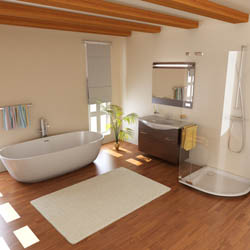
There’s a good reason vinyl is a popular choice for bathroom floors. Vinyl flooring consists of several layers of material sandwiched together to create a durable, practical and affordable floor covering. Although known for its durability, water resistance and affordability, vinyl flooring is also easy to clean and maintain, easy to apply and comes in a wide variety of designs and colors. All these features make vinyl flooring a standout flooring option for bathrooms.
The two basic types of vinyl floors are luxury vinyl tiles (LVT) and roll vinyl. Made from the same materials and sharing similar characteristics, both LVT and roll vinyl are very affordable bathroom flooring options.
To help you choose a vinyl floor for your bathroom, browse our collections of LVT and roll vinyl. Each collection offers a wide variety of design options to suit and complement any design style. Alternatively, visit our editorial pages for inspiration and ideas based on some of the latest bathroom designs and styles.
Benefits of vinyl flooring in bathrooms
Vinyl is often the preferred alternative for bathroom floors because it offers the perfect blend of practicality, appeal and affordability. In fact, the benefits of vinyl flooring in bathrooms are numerous.
Related Post: We recommend that you also read the rubber floor covering price article on the subject.
Benefits of using vinyl floors in bathrooms
• Waterproof
• Very easy to clean
• Comfortable and warm underfoot
• Available with non-slip grip
• Easy to apply • Affordable price
• Wide range of patterns and colors
Water resistant–Because it is made of PVC, vinyl has a natural resistance to water and moisture. Actually vinyl itself is a waterproof product, but the joints between planks and rolls are not. This means you have to be careful when installing vinyl floors in the bathroom to avoid any gaps.
It’s easy to clean – simply sweeping or wiping with a damp mop dampened with warm water and a neutral detergent is all it takes. Vinyl floors are one of the least-maintenance floors.
Comfortable and warm underfoot – Vinyl offers better insulation than ceramic tile and feels warmer underfoot. It’s also slightly softer than ceramic or stone, which is a nice feeling for bare feet on bathroom floors. Available with non-slip grip – This feature provides greater comfort and safety.
Easy to apply – Application methods vary depending on the vinyl product you choose; but vinyl is one of the easiest floors to apply.
Affordable – Vinyl is relatively inexpensive compared to alternative bathroom flooring options such as ceramic tile, stone tile and marble.
Available in many patterns and colors – A wide variety of design options gives you access to virtually limitless styles and gives you the freedom to create bathroom floors that perfectly match your tastes and home decor.
Disadvantages of vinyl flooring in bathrooms
Disadvantages of using vinyl floors in bathrooms
• Difficult to repair
• The implementation of LVT is different from other rooms of the house.
Difficult to repair – Vinyl flooring in bathrooms is not without obvious disadvantages. The only problem with vinyl flooring is that if it gets damaged it is difficult to repair. Vinyl is a fairly durable material, but if it is damaged, for example, by water damage, the floor will have to be removed and replaced.
The application is different from other rooms in the house – when installing LVT flooring in damp rooms such as bathrooms, you must follow special instructions. In smaller bathrooms (maximum 10 m2), edge joints can be made with silicone to prevent any water seepage from the expansion joint and onto the installed surface. For larger bathrooms, we recommend starting by applying insulating tape to the joint area and/or using a baseboard with a sealing lip before filling with some silicone.
 Flooring Systems