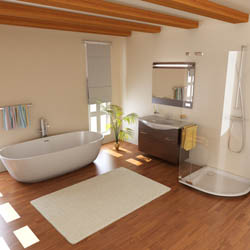
Choosing the best flooring material for your home depends on several factors, and these will vary depending on the room in question.
Every room in your home has its own requirements. For example, kitchens and bathrooms need floors that tolerate moisture well, while busy entrances and living rooms need floors that can handle heavy foot traffic. The presence of children and pets, and even the amount of direct sunlight a room receives, are also decisive factors in flooring choices. And when you consider all these factors, you will find that each type of floor has advantages and disadvantages.
To help you determine the floor that best suits your needs and budget, we’ve outlined some of the key advantages and disadvantages of different floor types.
What are the benefits of wooden parquets?
Whether solid or laminated flooring, wood flooring has many benefits. It is a natural material that is sustainably sourced and produced and offers a timeless look that brings warmth and elegance to a home. The warm base makes it easier to walk on, especially when compared to ceramic or porcelain tiles. It is also compatible with underfloor heating systems when extra warmth is required.
Related Post: We recommend that you also read the How to Choose Floor Covering for The Home article on the subject.
Wood is also incredibly durable and provides long-term durability. The solid nature of wood planks means they are easy to sand and repair once they begin to show signs of wear. That’s why wooden floors can last up to 100 years, depending on their quality and how well cared for them.
What are the disadvantages of wooden parquets?
One of the most important disadvantages of wooden parquet is cost. And this is not only the cost of materials, but also the cost of implementation. Installing hardwood floors yourself can be difficult and you will most likely need the help of a professional. Laminate flooring isn’t a cheap option, but it’s more affordable than solid hardwood and is usually easier to install yourself.
Another disadvantage of parquet is its inability to cope with moisture. Because it is a natural product, wood planks expand and contract as humidity and temperature levels rise and fall. This means that parquet cannot be used in rooms where heat, steam and humidity are common, such as bathrooms and laundry rooms. Laminate flooring is designed to handle moisture better and does not expand or contract to the same extent as solid hardwood. However, while laminate flooring is better at dealing with changes in temperature and humidity than solid hardwood, it is still not recommended for wet rooms such as bathrooms and laundry rooms.
What are the benefits of vinyl?
The advantages of vinyl flooring vary considerably depending on the type and quality of the product you choose. However, vinyl flooring offers some important advantages overall. Vinyl is a very durable material. It is resistant to damage and moisture, easy to apply and maintain, comfortable and quiet underfoot, and is available in a virtually unlimited range of colors and patterns. It is also relatively economical when compared to other flooring options.
What are the disadvantages of vinyl?
On the downside, the vinyl floor can collapse with heavy objects and be punctured by very sharp objects. It is also difficult to remove if glued. Another disadvantage is that vinyl flooring does not support very high temperatures and tends to fade with excessive UV exposure. Vinyl floors are therefore not recommended for outdoor use or in rooms with a lot of direct sunlight, such as patios.
However, thanks to new technologies, vinyl has improved significantly both in its design and in its construction. Some products today can counter the disadvantages often associated with vinyl flooring. For example, Tarkett’s next-generation LVT – Starfloor Click Ultimate is made with an extra-dense, rigid composite core that is more durable than ever before. These floors look and feel like wood. It also stands out for its durability to withstand heavy traffic, spills in kitchens and bathrooms, temperature changes inside and outside the home, and the general wear and tear of busy family life.
What are the benefits of laminate?
Laminate is less expensive than the alternative flooring options it often mimics, including ceramic and solid and engineered hardwood. And thanks to the high-resolution printing technique, laminate floors can look almost exactly like real wood and ceramic, but at a fraction of the cost. They’re also quick and easy to apply, making them even more convenient as you don’t need professionals. Depending on the size of the room, you can usually lay laminate flooring in one day.
Besides cost, another advantage of laminate flooring is its durability. With its extra-strong wear layer, laminate floors are highly resistant to scratches and stains. The top layer is also very smooth which means laminate floors are easy to wipe down.
What are the disadvantages of laminate?
Depending on the quality, laminate flooring can look fake compared to real laminate flooring. It is also much thinner than wood, meaning that once the top layer of laminate is damaged or worn, it cannot be sanded and re-polished like real wood flooring. Instead the entire floor should be replaced. There are a few things that can prematurely wear down the top layer of your laminate floor, such as standing water spills, excessive knocks, and improper cleaning and maintenance. As a result, laminate has a much shorter lifespan than parquet floors – averaging 10-20 years, depending on their quality and how well cared for them.
Another disadvantage of laminate floors is the possibility of water seeping through the joints if they are not applied correctly. If this happens, water can seep into the lower layers causing them to swell and ruin your floor.
 Flooring Systems